Why a disposable camera (or its modern cousin) belongs at every wedding
The official photographer captures the day. A disposable roll captures the night. A short field guide on why pairing the two is becoming a quiet wedding standard again.
By Filmo Studio
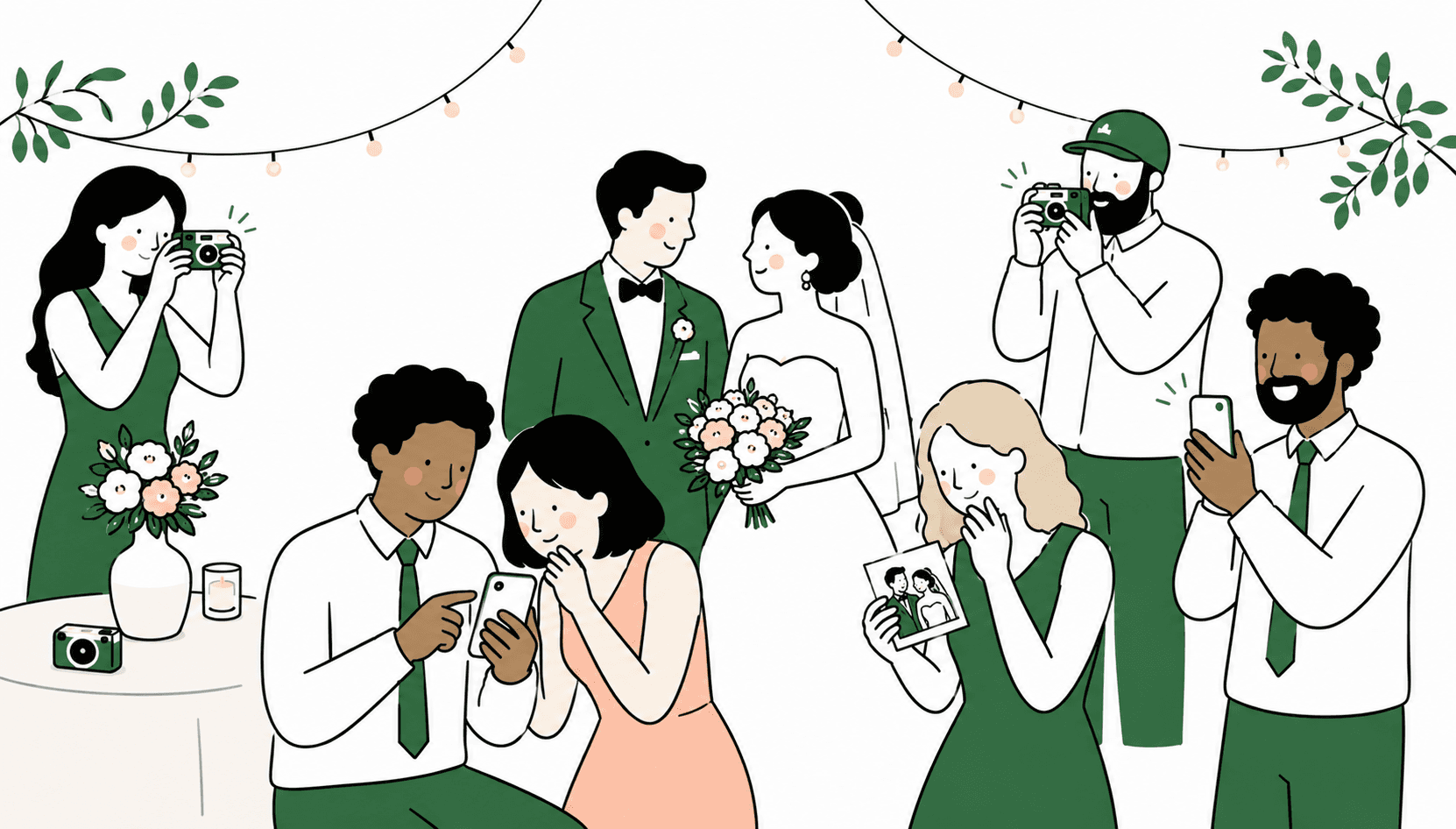
If you ask any wedding photographer who has been working for more than a decade about disposable cameras, you usually get the same half-smile. They've seen it: the table-top stack of yellow Kodak boxes at the reception, the slightly tipsy guests aiming at each other across centerpieces, the next-morning shoebox of frames the bride and groom never asked for and would never have framed otherwise.
Then phones happened. The boxes disappeared. Wedding photo flow became: hire a great photographer, hope guests post a few things to Instagram, ask the photographer for high-resolution downloads in six weeks. The disposable came back as a craft trend in the late 2010s, often as a single "prop" on the gift table — but the underlying instinct was already louder than its execution.
What the disposable was actually doing
The disposable camera at a wedding was never about image quality. It was a permission structure. It told every guest, in physical form: you are allowed to take photos at this party, and not only that — you are expected to. The role of "photographer" got distributed across the room.
What the official photographer captures is the wedding. What guests with disposable cameras capture is the night. The toast that ran long, the cousin sneaking a slice of cake at 1 a.m., the bride dancing barefoot with the flower girl. The official album is irreplaceable; the candid roll is irreplaceable in a different register.
“The reason couples loved the disposable was never the look. It was that it gave you photos taken from the inside.”
Why the format is coming back, modernised
The original disposable had three things going for it that we forgot to design for once cameras moved into pockets:
- Limited shots. A roll has 24 or 27 frames. You don't burst-shoot, because you can't.
- No previews. You can't "redo" a photo, so you live the moment instead of judging it.
- Delayed reveal. The roll comes back from the lab a week later, and you re-experience the night from outside it.
All three are now design decisions you have to actively make on a phone. The default phone camera is unlimited, instant, and invites perfectionism — exactly the wrong defaults for a wedding. The reason couples are pulling the disposable back into the picture is not nostalgia for grain. It's nostalgia for those three constraints.
How a shared digital roll lands the same instinct
If you're planning a wedding in 2026 and want the candid layer alongside your photographer, you have three reasonable options:
- Real disposable cameras. Authentic, but you're paying per roll, paying per developing, and you have a ~30% chance some rolls vanish at the venue.
- A shared Google Drive folder. Cheap, immediate, and unforgivably ugly the next morning. Nobody has ever scrolled a 700-photo Drive folder and thought "this is the wedding".
- A QR-and-shared-album setup like Filmo. Same constraints as a disposable — capped shots per guest, no previews, reveal on a timer — but the album lives in your photos app, in original resolution, and survives the move from one phone to the next.
We're biased about the third one for obvious reasons. But the underlying point doesn't depend on the tool: a wedding deserves a candid layer, and that layer is best when it's deliberate, constrained, and shared.
A few practical notes
If you're going to do this — disposable, shared roll, both — a few things travel well from a decade of weddings:
- Tell guests. Either with a printed card on the welcome table or a line in the dinner speech. Permission has to be explicit, or only one table will participate.
- Cap the shots per guest. Twenty-four to thirty is the right band. Fewer feels stingy; more turns into a photo dump nobody curates.
- Reveal it later, not during the night. The point is to live the wedding without checking a feed. Set the timer for the morning after, or a week later if it's a destination wedding.
- Accept that some frames will be blurry, dark, and out of focus. Those will be your favourites a decade from now.
The official album will hang on your wall. The candid roll is the one your friends will text you about, ten years later, when they find a print of it in a drawer.
Start your own roll
Your next event deserves an album that develops on its own time. Free for up to 5 guests, no card required.
Create a free eventKeep reading
 Hosting
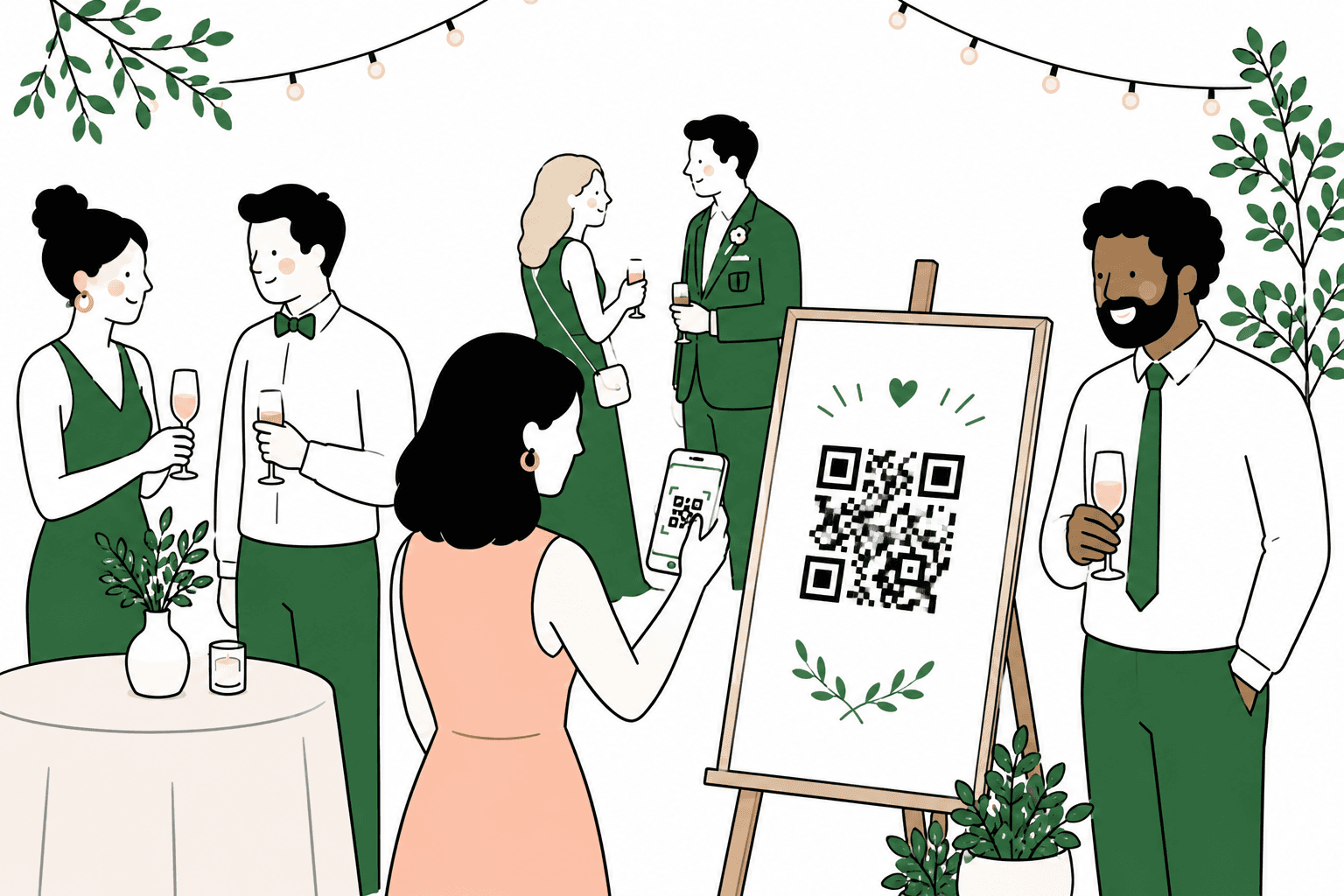
How to print event QR signage that guests will actually scan
A short, opinionated guide to QR signage at parties — placement, copy, and the one thing that matters more than the design.
Keep reading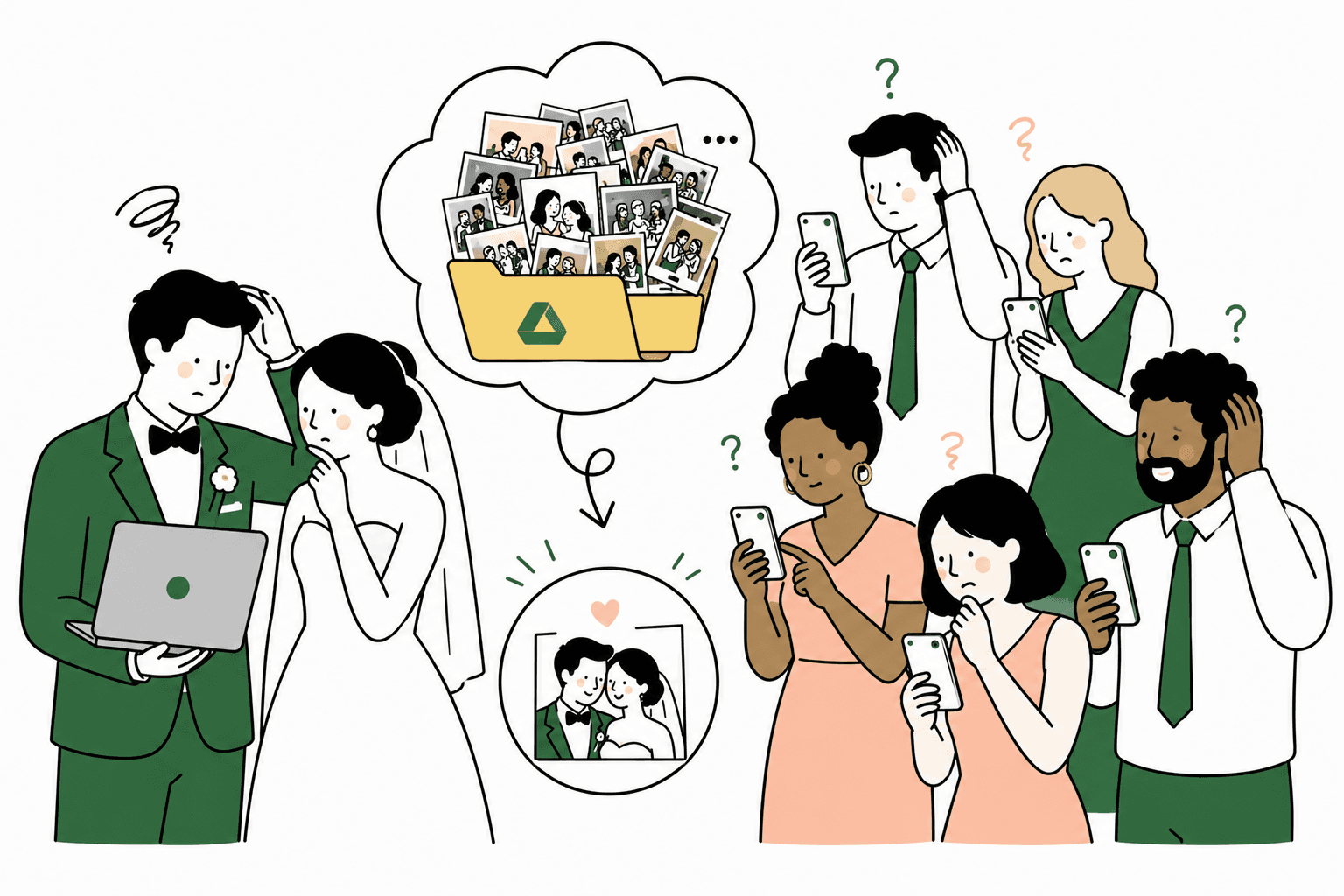 Field notes
The case against the post-wedding Google Drive link
1,200 unsorted photos in a shared folder is the modern equivalent of leaving a stack of unprinted negatives in a drawer. A short rant, with a way out.
Keep reading