Por qué esperar las fotos es la mejor parte
Los móviles modernos nos enseñaron a esperar la foto antes que el momento. Esto cambia cuando devuelves la espera al proceso.
Por Filmo Studio
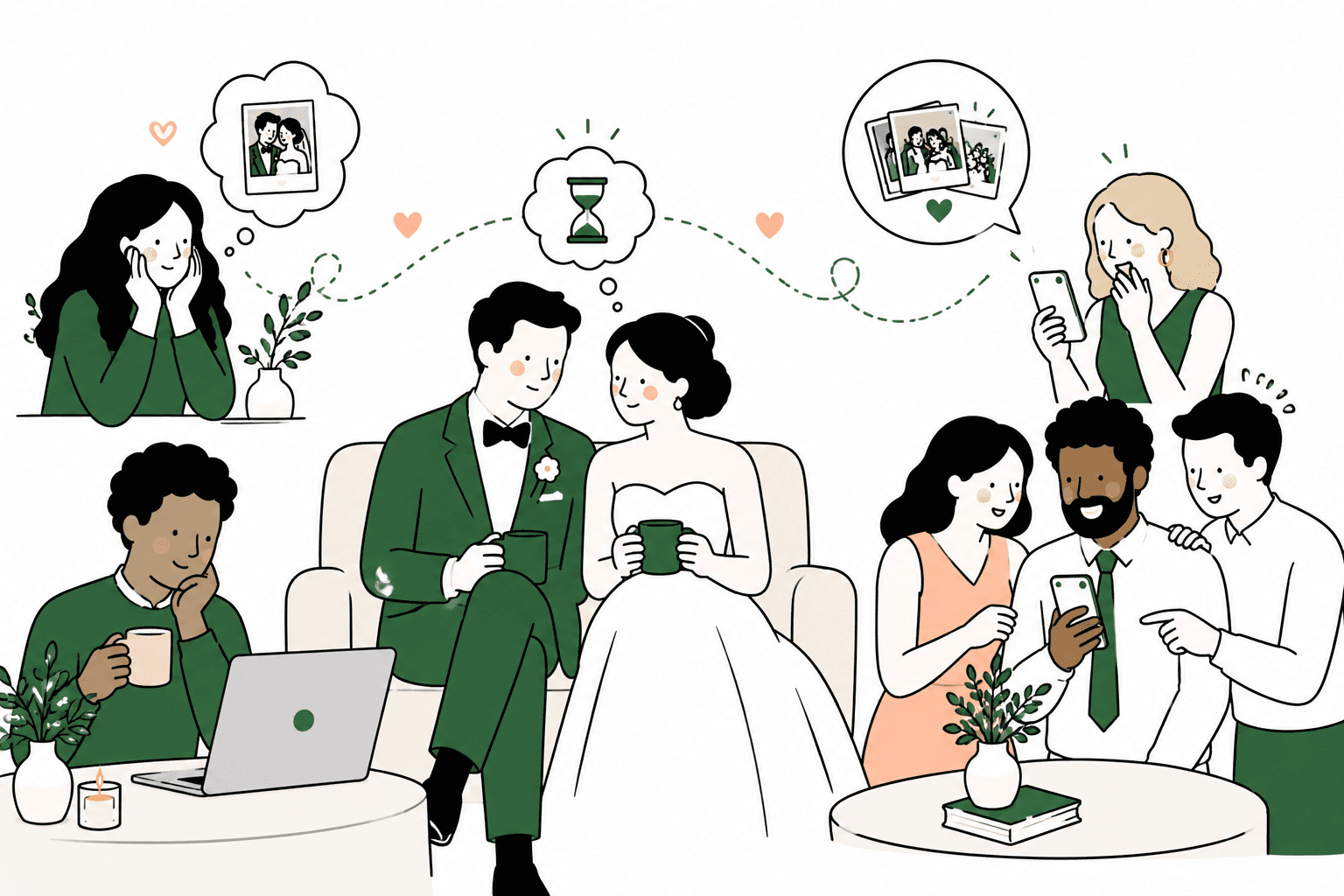
The instant-camera-roll feedback loop on a smartphone is one of the most successful pieces of behavioural engineering in the history of consumer software. You take a photo, it appears in the gallery in less than a second, you can review it, retake it, share it, post it, edit it, delete it, and most of the time you decide whether the photo is good or bad before the moment that produced it has even ended.
This sounds neutral. It is not.
What instant feedback does to a photo
Three things happen quietly when feedback is instant. First, the act of taking the photo collapses into the act of judging the photo. The two stop being separate, and you start composing for the version of yourself that will inspect the result two seconds from now. Second, your attention splits: half on the moment, half on the screen. Third, the photo becomes a unit of decision rather than a unit of memory. You're constantly choosing what to keep, what to delete, what to send.
Compare that to film. With film, you took the picture and you didn't know what you got. The interval between shot and result was forced into the design of the medium itself: drop the roll at the lab on Monday, pick up the prints on Friday. By Friday, you had forgotten what you photographed. The prints came back as a small surprise, and the moment was relived from the outside, calmly.
“Film made you spend the moment, then spend the memory of it. Phones make you spend both at the same time, and so you spend neither.”
Why the wait is doing real work
The week-long wait did three things, and modern phones removed all three:
- It de-coupled the moment from the photo, so you weren't compositing both at once.
- It made the photos feel like a small event, with anticipation built in.
- It selected for memory. By the time the prints came back, you remembered the moments well enough to know which photos mattered.
These are not aesthetic complaints about "phones bad, film good." Phones are also obviously incredible cameras. The point is that the wait was load-bearing, and we casually demolished it.
Designing the wait back in
The simplest way to put the wait back in is structural: take a photo into a place that doesn't show you the photo until later. That is the entire concept of a delayed-reveal album. Filmo defaults to a six-hour timer for parties and overnight for weddings. We've watched people pick a one-week timer for trips and a three-month timer for milestone birthdays — and the universal reaction at reveal time, no matter the duration, is the same one-word text:
It turns out the photo of your friend laughing too hard at midnight is much better when you see it three months later than when you see it three seconds later. We are very strong evolutionary hedonic animals; small surprises age beautifully.
What you can do with this, with or without us
If you want to test the principle without any new tool: shoot your next event in your phone's camera, and then promise yourself you will not open the gallery until tomorrow morning. (You will fail. Try again.) If you can manage to actually wait, the next-morning experience of scrolling that camera roll will surprise you.
And if you want the structural version of the same idea — a roll where the wait is the contract, not the willpower — that's roughly what we built.
Empieza tu propio carrete
Tu próximo evento merece un álbum que se revele a su ritmo. Gratis hasta 5 invitados, sin tarjeta.
Crear un evento gratisSigue leyendo
 Weddings
Por qué una cámara desechable (o su versión moderna) merece estar en toda boda
El fotógrafo oficial captura el día. Un carrete desechable captura la noche. Una pequeña guía de por qué juntar las dos se está volviendo, en silencio, el nuevo estándar.
Sigue leyendo Hosting
Cómo hacer carteles con QR que tus invitados sí escaneen
Una guía corta y opinada sobre los carteles con QR en eventos — colocación, copy, y la cosa que importa más que el diseño.
Sigue leyendo